Free E-Mail
Bible Studies
 King
Solomon
King
SolomonBeginning the Journey (for new Christians). en Español
Old Testament
Abraham
Jacob
Moses
Joshua
Gideon
David, Life of
Elijah
Psalms
Solomon
Songs of Ascent
(Ps 120-135)
Isaiah
Advent/Messianic Scriptures
Daniel
Rebuild & Renew: Post-Exilic Books
Gospels
Christmas Incarnation
(Mt, Lk)
Sermon on the Mount
(Mt 5-7)
Mark
Luke's
Gospel
John's Gospel
7 Last Words of Christ
Parables
Jesus and the Kingdom
Resurrection
Acts
The Early Church
(Acts 1-12)
Apostle Paul
(Acts 12-28)
Paul's Epistles
Christ Powered Life (Rom 5-8)
1 Corinthians
2 Corinthians
Galatians
Ephesians
Vision for Church
(Eph)
Philippians
Colossians,
Philemon
1
& 2 Thessalonians
1 & 2 Timothy,
Titus
General Epistles
Hebrews
James
1 Peter
2 Peter, Jude
1, 2, and 3 John
Revelation
Revelation
Conquering Lamb of Revelation
Topical
Glorious Kingdom, The
Grace
Great Prayers
Holy Spirit, Disciple's Guide
Lamb of God
Listening for God's Voice
Lord's Supper
Names of God
Names of Jesus
Christian Art
About Us
Speaking
Contact Us
Dr. Wilson's Books
Donations
Watercolors
Sitemap

 King Solomon: Wisdom, Wealth, Weakness
The Kingdom is a paradox. Jesus teaches that it is both small and great, both narrow and broad. In this lesson we'll examine several of Jesus' parables designed to help us understand the true nature of the Kingdom, in its size, in its exclusivity, and in its universal reach.
|
|
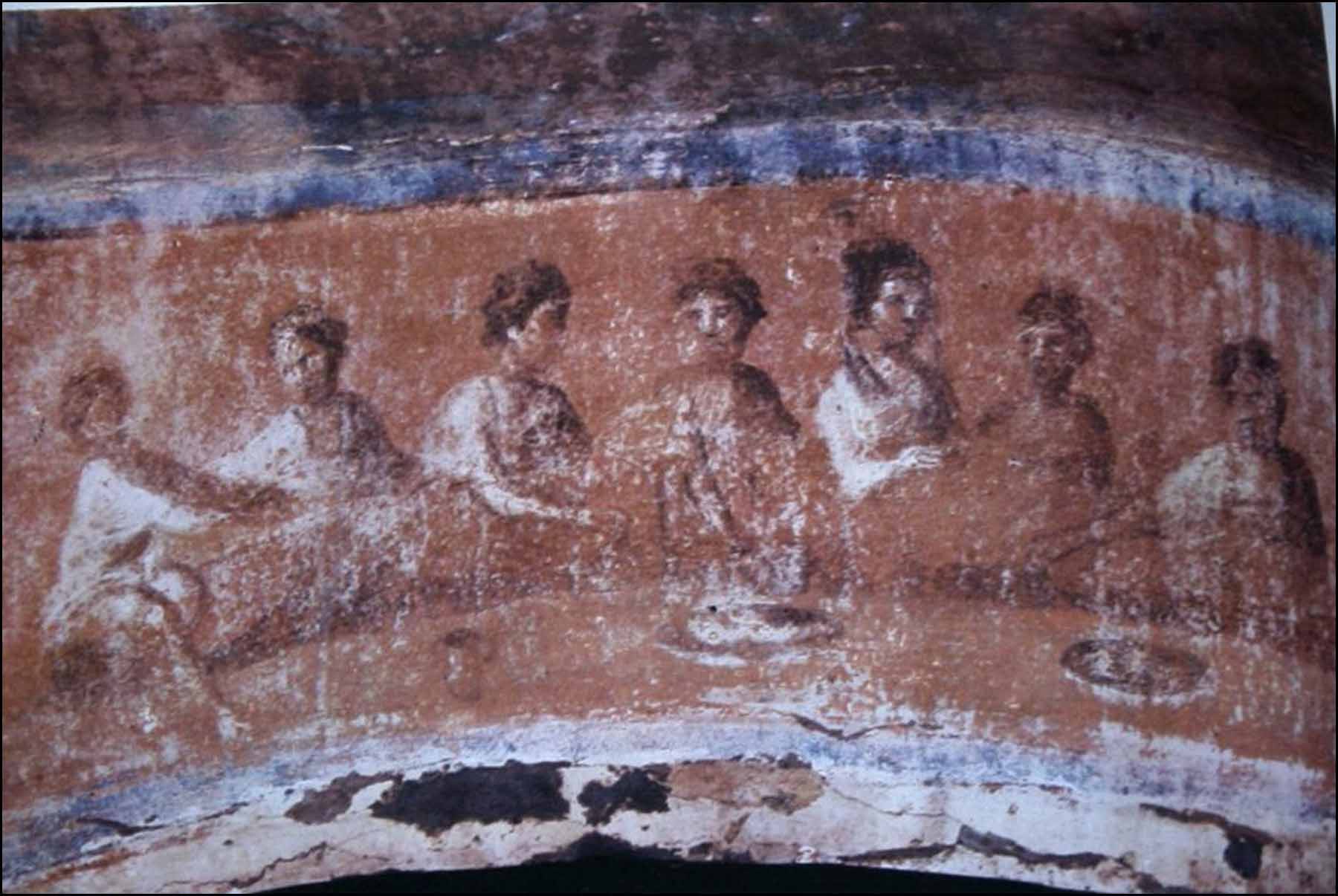
What is the Kingdom Like? (Luke 13:18)
We begin with two brief and familiar parables. The Parables of the Mustard Seed and of the Leaven (or Yeast) are comparisons.
"Then Jesus asked, 'What is the kingdom of God like? What shall I compare it to?'" (Luke 13:18)
A comparison is not an allegory. In a comparison, one point is compared; in an allegory each element in one scene fits an element in the other. A few of Jesus' parables have allegorical elements, such as the Parable of the Tenants (Luke 20:9-19). But the parables we are studying in this lesson are not allegories but simple comparisons.
Like a Mustard Seed (Luke 13:19a)
The first parable compares the Kingdom to a mustard seed.
"It is like a mustard seed, which a man took and planted in his garden. It grew and became a tree, and the birds of the air perched in its branches." (Luke 13:19)
A mustard seed, parallels in the other Synoptic Gospels tell us,1 was considered by the Jews as the smallest of seeds. Later, Jesus uses the mustard seed to describe the tiniest amount of faith (Luke 17:6). "Mustard" is usually identified as Sinapis nigra, "black mustard," which grows to a shrub about 4 feet high, but occasionally can grow to 15 feet high and would qualify as a "tree." Three varieties of mustard were grown in gardens because of their aromatic seeds.2 Jesus mentions the growth, but the main emphasis seems to be on the beginning (very small) and the end (very large). Small beginnings, large endings.
Birds Perching in Its Branches (Luke 13:19b)
But there's one more detail to consider:
"The birds of the air perched in its branches." (Luke 13:19b)
Probably all that means is that the tree was large enough to sustain life around it. It isn't just a marginal tree, but one which provides support for wildlife. Some think that the birds of the air represent the Gentile nations seeking refuge with Israel.3 That may be so (as a secondary allegory). But I think "the birds of the air perched in its branches" is the way Jesus rounded out his story, in words echoing Daniel and Ezekiel.4
Note that in the Parable of the Sower, the birds, pecking at seed along the path, stand for the devil, "who comes and takes away the word from their hearts" (Luke 8:5, 12). But here the birds are not enemies but welcomed guests. Jesus' use of examples is flexible. Just because an item was used for evil in one parable doesn't mean it has to have the same significance in another.
Comparing the Kingdom to Yeast (Luke 13:20-21)
|
|
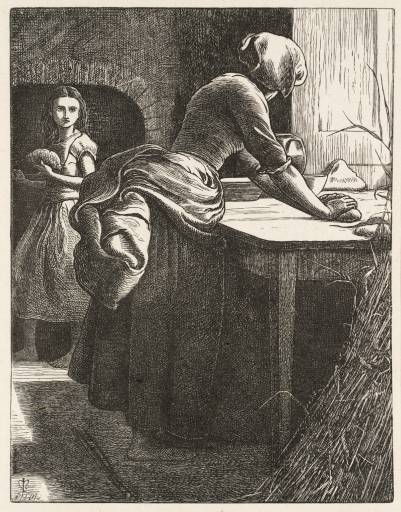
The Parable of the Leaven has a similar idea.
"Again he asked, 'What shall I compare the kingdom of God to? It is like yeast that a woman took and mixed into a large amount of flour until it worked all through the dough.'" (Luke 13:20-21)
Jesus provides another comparison to explain the Kingdom of God. He compares it to a small lump of yeasty dough that is kneaded into a large amount of flour until it is homogenized. In the West we can purchase sealed packets of dry yeast for baking. But in Jesus' day, they would save a little bit of one day's dough, and keep it moist until the next morning when they would mix it into the dough for next day's bread.
If you've never baked a loaf of bread, you may not understand the radical difference that yeast makes. You take flour, water, a bit of oil and salt and knead it together with some softened yeast. It is pretty compact at this point, and if you were to bake it now, the bread would be heavy and hard. I've made some pretty awful bread in my day, to the point that my wife accuses me of giving my son what I claimed was bread but was really a stone (compare Matthew 7:9).
As the yeast begins to metabolize the sugars in the dough, it forms carbon dioxide that puffs into tiny gas pockets all throughout the dough. The gas can't escape because of the elastic gluten in the flour, so these pockets of gas stay in the loaf. When the loaf finally goes into the oven, the gas expands even more as the temperature rises, until the dough finally bakes, holding the shape of those tiny gas pockets, now filled with air.
And as the bread rises, the size increases many fold. When I bake bread, I use a large pottery bowl and place the kneaded dough in the bottom of the bowl. By the time it has risen, the dough is nearly overflowing the bowl.
What's the point of the parable? A small amount of yeast will leaven a large amount of dough. The tiny lump of yeast will produce a large loaf of bread. Small beginnings, large endings.
Occasionally people get confused about this parable. They reason that since leaven is used negatively sometimes (Luke 12:1; 1 Corinthians 5:6-8; Galatians 5:9), that it must be negative in the Parable of the Leaven. As we've seen in the Parable of the Mustard Seed, that assumption isn't warranted.
Small Beginnings, Much Discouragement
The primary idea of both parables is that what is small now -- because of the Kingdom's influence -- will someday be very great.
If you're like me, sometimes you get discouraged. What you've worked so hard to do seems so small and insignificant -- so futile, so hopeless, so tiny. The disciples may have felt that way about the Kingdom of God. Here's an itinerant carpenter-preacher speaking in villages in a minor Roman province. Not very impressive when you look at the big picture. But within a single generation after Christ's death, Christianity had spread all over the Roman empire and beyond -- India to the East, Ethiopia to the South, and Britannia to the West.
Just because the Kingdom didn't seem very great as yet, Jesus is saying in these parables, doesn't mean that it will stay small. The Kingdom of God begins as small and insignificant, but grows to become large and powerful. Mustard seeds versus trees, tiny leaven-lumps versus large bread loaves, fresh and fragrant from rising, and ready for the oven.
What is it that you are facing that discourages you? What is the mountain that seems insurmountable? There's a trite but true old saying, "Little is much if God is in it." There's a very interesting command in Zechariah 4:10: "Don't despise the day of small things."5 Too often we, like Jesus' first disciples, are tempted to give up when we see the tiny, struggling beginnings, and think that's all there will be.
So Jesus' parable about the mustard seed and the tree is a parable for me and you, too. Tiny leaven, big loaf is intended for us, as well. My disciple friend, let Jesus speak encouragement and faith to you this day. Don't quit. Don't judge your efforts or Jesus' power by what you can see right now. The seeds we sow today will grow great crops in season. "For we walk by faith, not by sight" (2 Corinthians 5:7, KJV).
In fact, the entire Bible is filled with the paradox illustrated by these parables:
"Having believed, you were marked in him with a seal, the promised Holy Spirit, who is a deposit guaranteeing our inheritance until the redemption of those who are God's possession -- to the praise of his glory." (Ephesians 1:13-14)
"So will it be with the resurrection of the dead. The body that is sown is perishable, it is raised imperishable; it is sown in dishonor, it is raised in glory; it is sown in weakness, it is raised in power; it is sown a natural body, it is raised a spiritual body." (1 Corinthians 15:42-44)
"Those who sow in tears will reap with songs of joy." (Psalm 126:5)
"I consider that our present sufferings are not worth comparing with the glory that will be revealed in us." (Romans 8:18)
"For our light and momentary troubles are achieving for us an eternal glory that far outweighs them all." (2 Corinthians 4:17)
|
Q1. (Luke 13:19-21) What is the
point of the Parables of the Mustard Seed and the Leaven?
How would this be encouraging to Jesus' disciples who had
expected an instant Messianic Kingdom? How might it be
encouraging to people experiencing smallness or poverty in
their lives?
|
Strive to Enter the Narrow Door (Luke 13:22-35)
When I read our next passage, the Parable of the Narrow Door, I sense Jesus' sadness -- sadness that only a few will be saved, sadness that many will not enter the door, sadness that many of his people will be excluded from the feast, sadness that Jerusalem resists his love and desire to gather them to the Father. Sadness.
How Many Will Be Saved? (Luke 13:22-23)
As Jesus is teaching his way through the land, someone raises an important question.
"Then Jesus went through the towns and villages, teaching as he made his way to Jerusalem. Someone asked him, 'Lord, are only a few people going to be saved?'" (Luke 13:22-23)
We hear the same question debated in our own day. There's an old joke about St. Peter showing newcomers around heaven. When the tour comes near a huddled group of people, St. Peter puts his finger to his lips. "Quiet," he says. "Don't disturb them. Those are the Baptists -- and they think they're the only ones here." (I happen to be a Baptist.)
Some groups are so tight that they actually think that other Christian denominations won't get to heaven. Others see God's love as so forgiving that they can't imagine how anyone can ultimately be lost. For them, hell isn't possible.
Actually, my dear friends, none of us really knows the answer to the question, "How many?"or "How few?"The best we can do on our own is theological speculation. But we'll learn if we listen to Jesus' response to the question. Jesus gives us an authoritative answer, though it's not a direct one. Instead of answering Yes or No, he characteristically tells a story.
Strive to Enter (Luke 13:24-25a)
"He said to them, 'Make every effort to enter through the narrow door, because many, I tell you, will try to enter and will not be able to. Once the owner of the house gets up and closes the door, you will stand outside knocking and pleading, "Sir, open the door for us."'" (Luke 13:24-25a)
The Parable of the Narrow Door seems to involve a homeowner holding a banquet (if we can include elements in the parable from verse 28). There is a narrow door at which guests are supposed to enter, but the time comes -- perhaps when the banquet is ready to begin -- that the host gets up and closes the door. Eventually, there is knocking and pleading from outside the door from would-be attenders who arrived late. But the host simply says, "I don't know you. Get away, you rabble."
It's not quite that simple, since the parable proper only seems to extend from verses 24 to 25; then it merges into a prophetic portrayal of the heavenly banquet. Let's look at some of the elements.
Jesus tells the questioners,
"Make every effort to enter through the narrow door...."(Luke 13:24)
The phrase "make every effort" (NIV) or "strive" (NRSV, KJV) is Greek agōnizomai, which originally meant "engage in an athletic contest," and then "to fight, struggle." The word is used of wrestling in prayer (Colossians 4:12), and "fighting the good fight"(1 Timothy 6:12; 2 Timothy 4:7). Danker translates the phrase in our verse, "strain every nerve to enter."6
This is no casual entry whenever we're ready. My wife sometimes says to me, "We have to be on time! "That's the sense here. We cannot fail to get to this appointment in time. It is urgent! It is pressing! It is critical!
The Narrow Door
The goal is the door, Greek thura, "door, a passage for entering a structure, entrance, doorway, gate."7 In this case it is probably the door to a house or courtyard that is in mind. There's no indication that the latecomers can see the host, but are probably talking through a solid door.
The next word I want to examine is translated "narrow" (NIV, NRSV) or "strait" (KJV), Greek stenos, in reference to dimension, "narrow." In Greek literature it is used of gates, doors, prison cells, and pathways.8 The related verb means "to crowd, cramp, confine, restrict."9
In my mind's eye I see the grand house where the banquet will take place, but people are only entering through a small door at the side. The grand front doors are closed, and entry is only through the side door. Jesus tells his hearers that they must strain to get through that door. It won't be easy -- perhaps from the narrowness of the doorway (you have to lose a few pounds to get through) or from the crush of people trying to get in through this single door. Whatever the cause, getting in won't be easy, but we are to make every effort, strain, struggle to get in.
Elsewhere in Jesus' teaching we see the same kind of straining and difficulty to get into the Kingdom of God.10 Best known is Jesus' teaching in the Sermon on the Mount:
"Enter through the narrow gate (Greek pulē). For wide is the gate and broad is the road that leads to destruction, and many enter through it. But small is the gate and narrow the road that leads to life, and only a few find it." (Matthew 7:13-14)
This is a different parable told in a different setting, for it is speaking of gateways to roads rather than doorways to houses, but the idea is similar.
Trying but Not Being Able to Enter (Luke 13:24)
In our passage, Jesus says,
"Many, I tell you, will try to enter and will not be able to." (Luke 13:24)
Why can't they get in? Is the way barred? No, but we know from Jesus' other teaching that entry into the Kingdom of God requires repentance and change. And many, many want the goal -- the inheritance of the Kingdom or of heaven -- so long as it costs them nothing, especially their allegiance and obedience. And so they try to enter, but do not succeed when they learn the cost.
In Jesus' parable, finally the host "gets up and closes the door..." (Luke 13:24). Apparently the host is seated or reclining at the banquet table, but it is time to begin and he deliberately gets up and shuts the door. No more guests can enter. The banquet will begin.
Now those who had tried the first time but failed to enter, come again, see the door closed, and begin pounding on it. They knock and plead to no avail.
I Don't Know You (Luke 13:25b-27)
"But he will answer, 'I don't
know you or where you come from.'
Then you will say, 'We ate and drank with you, and you taught in our
streets.'
But he will reply, 'I don't know you or where you come from. Away
from me, all you evildoers!'" (Luke 13:25b-27)
Through the closed door, the homeowner denies that he knows those outside, shouting to get inside. "I don't know you or where you come from."
That seems a bit harsh. But I see these people as name-droppers trying to crash a party. They may have met the host once, or worked in the building next door, or have a cousin who was friends with the host's son, but they don't have any real relationship themselves. They try to create a bogus relationship: "We ate and drank with you, and you taught in our streets" (Luke 13:26), but the host denies any relationship that obligates him to open the door, and shoos them away. "Away from me, all you evildoers" (Luke 13:27). We see similar ideas in the Sermon on the Mount (Matthew 7:21-23) and Jesus' Parable of the Ten Virgins (Matthew 25:1-18). It sounds like a person who is fed up with the excuses of party-crashers and tells them to "get lost."Then the host leaves the door where the latecomers are clamoring, and returns to his guests.
|
Q2. (Luke 13:24-27) Why do you
think Jesus characterizes the entrance to the Kingdom here
as "narrow"? Why will many people "try to enter and will not
be able to"? Why would people delay entering until it is too
late?
|
The Great Eschatological Banquet (Luke 13:28-30)
Now Jesus shifts from the Parable of the Narrow Door to the familiar scene of the eschatological banquet, which we'll also consider in Lesson 10. ("Eschatological" means "referring to the end times.")
"There will be weeping there, and gnashing of teeth, when you see Abraham, Isaac and Jacob and all the prophets in the kingdom of God, but you yourselves thrown out. People will come from east and west and north and south, and will take their places at the feast in the kingdom of God. Indeed there are those who are last who will be first, and first who will be last." (Luke 13:28-30)
We see this banquet first prophesied in Isaiah:
"On this mountain the Lord
Almighty will prepare
a feast of rich food for all peoples,
a banquet of aged wine --
the best of meats and the finest of wines.
On this mountain he will ... swallow up death forever.
The Sovereign Lord will wipe away the tears from all faces;
he will remove the disgrace of his people from all the earth." (Isaiah 25:6-8a)
Notice that it is a banquet "for all peoples"-- that is, not just Jews, but also the Gentiles. Jesus makes this point as well:
"People will come from east and west and north and south, and will take their places at the feast in the kingdom of God." (Luke 13:29)
Jesus alludes to this Great Banquet on several other occasions:
- Praising the faith of the Centurion (Matthew 8:11-12)
- The Parable of the Great Banquet (Luke 14:15-24; Matthew 22:2-14)
- At the Last Supper (Mark 14:25; Matthew 26:29)
It is finally referred to in the Book of Revelation as "The Marriage Supper of the Lamb" (Revelation 19:20). One of the paradoxes of this banquet is that the guests are honored inside at the same time as sinners suffer judgment and anguish outside.
Jesus' description of the Great Banquet in Luke 13:28-30 teaches something important about the Kingdom. It is extremely broad in its invitation list, but extremely narrow in the guests that will strive to enter its narrow door.
The Gentiles, whom the Jews considered "last," may well be given first place in this banquet, while the Jews, who considered themselves "first" in God's estimation, may find themselves last -- perhaps even outside the Kingdom, unless they repent and respond to Jesus' call.
|
Q3. (Luke 13:28-30) The great
"feast in the kingdom of God" has guests from all over the
world. Who are they? Who will be the ones "thrown out" of
the feast? Why will they be excluded?
|
Jesus' message is plain: Repent and enter the Kingdom of God while you can, because there will come a time when it is too late to respond. This is a time-critical decision. Paul says, "I tell you, now is the time of God's favor, now is the day of salvation" (2 Corinthians 6:2).
Jesus says that we must try very hard to enter now; there is no guarantee of another opportunity. I think of Paul witnessing to Felix, Governor of Caesarea. Felix is afraid of judgment, and dismisses Paul until a "convenient time" to talk again. And, mercifully, there are other times to talk. But one day, two years later, Felix is abruptly transferred out of Caesarea and his opportunity to be saved is gone. He never sees Paul again (Acts 24:24-27).
There is a door of salvation before you and your family, your neighbors and your friends. It is a narrow door, but it is still open to you. And Jesus calls you -- no, commands you -- "Strive, struggle to enter through the narrow door." Do it now, don't wait. It is a time-sensitive command. For the day will come when the door will be abruptly shut, and unless you are inside God's household, God's Kingdom, it will be forever too late.
God's Kingdom is like that: difficult to enter, but glorious. Small now, but one day great beyond all description.
|
Q4. (Luke 13:18-20) According to
these parables in this lesson, in what ways is the Kingdom
small? In what ways does the Kingdom grow? In what ways is
the Kingdom door narrow? In what way is the Kingdom banquet,
on the one hand, large and diverse, and on the other,
selective?
|
Prayer
 A book of the compiled lessons is available in both e-book and paperback formats. |
Father, as I study these verses, I sense your urgency and the anguish. You don't want anyone to perish but all to reach repentance. You are calling, inviting, wooing, commanding -- doing everything in your power to draw men and women to yourself and to your salvation. Forgive me for my complacency. Oh God, rekindle that sense of urgency and anguished love within me today. In Jesus' name, I pray. Amen.
Key Verses
"What is the kingdom of God like? What shall I compare it to? It is like a mustard seed, which a man took and planted in his garden. It grew and became a tree, and the birds of the air perched in its branches." (Luke 13:18-19, NIV)
"Make every effort to enter through the narrow door, because many, I tell you, will try to enter and will not be able to." (Luke 13:24, NIV)
References (Abbreviations)
1. Matthew 13:31-33; Mark 4:30-32.
2. R.K. Harrison, "Mustard," ISBE 3:449.
3. They cite Daniel 4:12, 21; Psalm 104:13; Ezekiel 17:23; 31:6; and 1 Enoch 90:30.
4. Jeremias, Parables, p. 147. C.H. Dodd, The Parables of the Kingdom (Scribners, 1961), p. 153. T.W. Manson, The Sayings of Jesus (Eerdmans/SCM Press, 1957).
5. See my article "Don't Despise the Day of Small Things" www.joyfulheart.com/encourag/small-tg.htm
6. Agōnizomai, BDAG 17.
7. Thura, BDAG 462.
8. Stenos, BDAG 942-943.
9. Stenochōreō, BDAG 942.
10. The other reference is in Luke's Gospel: "The Law and the Prophets were proclaimed until John. Since that time, the good news of the kingdom of God is being preached, and everyone is forcing his way into it" (Luke 16:16). The verb "forcing" in the last clause of 16:16 is Greek biazō, "to gain an objective by force, use force," then "seek fervently, try hard" (BDAG 175-176). Though the meaning of this verse is disputed, I think it relates to straining to enter the narrow door before the door is closed permanently.
Copyright © 2024, Ralph F. Wilson. <pastor joyfulheart.com> All rights reserved. A single copy of this article is free. Do not put this on a website. See legal, copyright, and reprint information.
 |

|
In-depth Bible study books
You can purchase one of Dr. Wilson's complete Bible studies in PDF, Kindle, or paperback format -- currently 48 books in the JesusWalk Bible Study Series.
Old Testament
- Abraham, Faith of
- Jacob, Life of
- Moses the Reluctant Leader
- Joshua
- Gideon
- David, Life of
- Elijah
- Psalms
- Solomon
- Songs of Ascent (Psalms 120-134)
- Isaiah
- 28 Advent Scriptures (Messianic)
- Daniel
- Rebuild & Renew: Post-Exilic Books
Gospels
- Christmas Incarnation (Mt, Lk)
- Sermon on the Mount (Mt 5-7)
- Luke's Gospel
- John's Gospel
- Seven Last Words of Christ
- Parables
- Jesus and the Kingdom of God
- Resurrection and Easter Faith
Acts
Pauline Epistles
- Romans 5-8 (Christ-Powered Life)
- 1 Corinthians
- 2 Corinthians
- Galatians
- Ephesians
- Philippians
- Colossians, Philemon
- 1 & 2 Thessalonians
- 1 &2 Timothy, Titus
General Epistles
Revelation
Topical

 To be notified about future articles, stories, and Bible studies, why don't you subscribe to our free newsletter, The Joyful Heart, by placing your e-mail address in the box below. We respect your