


|
Old Testament
New Testament
Gospels
Acts
Paul's Letters
General Letters
Revelation
Topical Studies
Beginning the Journey (for new Christians). en Español

|
Old Testament
New Testament
Gospels
Acts
Paul's Letters
General Letters
Revelation
Topical Studies

|
Home
Bible Studies
Articles
Books
Podcasts
Search
Menu
Donate
About Us
Contact Us
FAQ
Sitemap


Free
E-mail Bible Study
 Experiencing the Psalms
Home | Bible Studies | Articles | Books | Podcasts | Search | Menu | Donate | About Us | FAQ | Contact Us
|
|
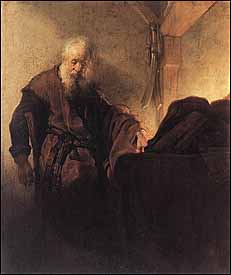
The Situation
Though Paul had never seen the Colossian church in person, you can sense his love for them in the first few verses of this letter.
It's likely that Paul had passed by Colossae on his way to the "big city" of Ephesus, but he had never been to the church in Colossae. In fact, it hadn't existed when he had gone past it on the great Royal Highway from the East that ended in Sardis and Ephesus, 100 miles west.
Paul spent nearly three years in Ephesus, preaching first in the synagogue, then later, when he had been kicked out, he rented the lecture hall of Tyrannus, where he taught the new disciples.
Epaphras was one of these new disciples. No doubt, while in Ephesus, he heard of Paul, sat under his teaching, and became a Christian. Then he went back to Colossae and started a church (1:7-8). Now Epaphras has come to Rome, sought Paul out, and has asked him to write a letter to encourage and help stabilize the Colossian believers in the face of false teaching.
Paul and Timothy, the Senders (1:1)
And so Paul begins the letter.
"1 Paul, an apostle of Christ Jesus by the will1 of God, and Timothy our brother, 2 To the holy and faithful brothers in Christ at Colosse: Grace and peace to you from God our Father." (1:1-2)
Greek letters in Paul's time began with a kind of formula: first the name of the sender, then the name of the recipient, and finally a greeting.
Paul introduces himself in a kind of formal manner:
"Paul an apostle of Christ Jesus by the will of God." (1:1a)
This is for two reasons. First, the Colossians have never met Paul. Second, he needs to establish his authority so that he can teach them and warn them of the heresy that threatens the church. Apostle, means, "one sent on a commission." He is not self-appointed. He is an apostle "by the will of God." He is commissioned by God himself and speaks with God's authority.
Notice the inverse word order of "Christ Jesus," different than what we're used to. Paul's reason is to emphasize Jesus' messiahship. Christ, of course, means, "messiah," so this reads: Messiah Jesus. As we'll see as the letter unfolds, one of the threats is from a Jewish group that may be questioning Jesus' messiahship and prominence. So Paul begins with Christ's awesome title from the very first sentence.
To the Colossian Believers (1:2)
"To the holy and faithful brothers in Christ at Colosse: Grace and peace to you from God our Father." (1:2)
He addresses the Colossian believers as "holy and faithful." "Holy," in that they are set apart to God, they are not their own. 2 And "faithful," in that they are both full of faith and are acting in a faithful and trustworthy manner (the word can have both connotations).3
Now Paul offers them a greeting:
"Grace and peace to you from God our Father." (1:2)
"Grace" was the characteristic Greek greeting, which extended a word of favor (or grace) to the person greeted. "Peace" (shalom in Hebrew) was the characteristic Jewish greeting. Paul combines these greetings and then identifies the source of the blessings: "God our Father."
Thanksgiving for the Colossians' Faith and Love (1:3-6)
Now Paul lets his readers know of his personal concern for them and his joy in their faith:
"We always thank God, the Father of our Lord Jesus Christ, when we pray for you." (1:3)
Though Paul has not seen their face, he prays for this new Colossian church. "Pray" is in the present tense, suggesting continuing, ongoing action. Paul was in the habit of praying for the Colossians. And whenever he prays, he gives thanks. Why? Because he has heard good things about this church -- both by reputation and from the reports brought by Epaphras.
"We thank God ... 4 because we have heard of your faith in Christ Jesus and of the love you have for all the saints -- 5 the faith and love that spring from the hope that is stored up for you in heaven and that you have already heard about in the word of truth, the gospel 6 that has come to you." (1:4-6a)
It's a complicated sentence -- but get used to it. Sometimes in Greek, Paul can go on for a whole paragraph or two without a period. Mercifully, our English translations smooth out these run-on sentences a bit.
Here are three causes for Paul's thanksgiving:
- Faith in Christ Jesus. They believe in Messiah Jesus.
- Love for the all the saints. This church has an especially open and far-reaching love. Instead of only loving people who are "just like them," they have demonstrated a love for "saints" (people set apart to God) from a variety of places, who have probably stopped in Colossae to rest. And when they arrived they were shown generous hospitality and showered with love.
Faith, that is, belief in Jesus, can be faked. Love can be put on -- at least for a while. But faith and love together are quintessential earmarks of solid Christians. Notice the third cause, from which the first two spring: 4
- Hope "that is stored up for you in heaven" (1:5). Their focus is not this-worldly, but other-worldly, set upon an inheritance "stored up" for them in heaven. This word "stored up" (NIV), "laid up" (NRSV, KJV) is apokeimai, originally, "to put away for safekeeping," here, "to reserve as award or recompense, reserve," a common term in honorary documents expressing appreciation for sense of civic or other communal responsibility.5
Here we have the three virtues that Paul talked about at the end of the "Love Chapter," 1 Corinthians 13.
"And now these three remain: faith, hope and love. But the greatest of these is love." (1 Corinthians 13:13)
You've already heard about this hope, Paul says, "... in the word of truth, the gospel that has come to you" (1:5b).
The Gospel is Multiplying (1:5b-6)
The Colossians have been enticed by the false teachers to turn from Christ to a faith where he wasn't at the center. So Paul explains that they are not just an isolated few, but part of a world-wide movement.
"All over the world this gospel is bearing fruit and growing, just as it has been doing among you since the day you heard it and understood God's grace in all its truth." (1:6)
The word "gospel" means "good news." Here it refers to the message of salvation in Jesus Christ. The gospel is active ("bearing fruit and growing"). It recalls the description of the word of God which is "living and active," which penetrates and judges (Hebrews 4:12).
Notice how Paul characterizes the gospel, with almost human characteristics:
- Gospel -- "good news"
- The word of truth, that is a message that can be trusted. Dear friend, the gospel of Jesus' salvation is true. You can rely upon it.
- Bearing fruit.6 What kind of fruit tree is the gospel? One that produces holy, transformed, born-anew Christians, believers in Jesus, who model their lives after Jesus' life.
- Growing (NIV, NRSV) is auxanō, "to become greater, grow, increase." 7 The early church had not stagnated or plateaued after a few years. The Christian movement was growing rapidly all over the known world. In the lifetime of the apostles the gospel reached Iraq and India under the Apostle Thomas, and perhaps Spain through the Apostle Paul. Their disciples then carried the good news to Europe and the British Isles, that were then Roman colonies and outposts. "Bearing fruit and growing" echo Jesus' Parable of the Sower where the seed ("the Word of God") in the good soil "produced a crop -- a hundred, sixty or thirty times what was sown" (Matthew 13:8).
Where you live, it may not seem like the Christian movement is growing. In fact, in Western Europe and America, it seems to be contracting at present. But world-wide, the Christian movement is growing rapidly. Sub-Saharan Africa became predominately Christian by the end of the twentieth century, as did Korea. The Christian church is growing rapidly in China and South America, in parts of India, and elsewhere.
|
Q1. (Colossians 1:5-6) Paul glorifies
the gospel, the good news. What words does he use to describe
the action of the gospel in verses 5 and 6? Given the temptation
the recipients have to adopt another religious philosophy, why
do you think he reminds them of the world scope of the gospel's
influence? What happens in our day when a church becomes
embarrassed or unimpressed with the gospel message? How does
this affect the church?
|
God's Grace (1:6b)
"All over the world this gospel is bearing fruit and growing, just as it has been doing among you since the day you heard it and understood8 God's grace in all its truth." (1:6)
Notice the key role of both hearing the gospel and understanding it. It is possible, of course, to hear the story of Jesus without understanding its implications. But when a person grasps "God's grace in all its truth," they turn to Jesus.
How many of your friends have heard the gospel, but not grasped the glorious truths of God's grace. "Grace" (charis) describes the nature of our salvation. Most people believe that they must work for their salvation. The wonderful truth of God's grace is that salvation is a free gift, granted by God, through Jesus Christ. All we do is to believe it -- that is, embrace the truth for ourselves. The classic scripture on grace in the New Testament is:
"For it is by grace you have been saved, through faith -- and this not from yourselves, it is the gift of God -- not by works, so that no one can boast." (Ephesians 2:8-9)
Epaphras, the Faithful Minister (1:7-8)
Now Paul mentions Epaphras, whom we assume is the founder of the church in Colossae:
"7 You learned it from Epaphras, our dear fellow servant, who is a faithful minister of Christ on our behalf, 8 and who also told us of your love in the Spirit." (1:7-8)
See what it says about him:
- "Dear" (NIV, KJV), "beloved" (NRSV). Epaphras is dear not only to the Colossians, but also to Paul himself.
- Fellow servant. Paul acknowledges him as a colleague. And, as a mark of humility, refers to both Epaphras and himself as a "servant." The word is probably better translated, "fellow-slave," from the root doulos, "slave." This isn't about Paul and Epaphras, but about their Master, their Owner -- Jesus! One of the first steps of Christian maturity is to realize that the Christian faith isn't about us -- about our salvation and relief from some of our problems. It is about God and his Son Jesus. We are not the center, we are servants of the Central One.
- Faithful. "Faithful," of course, refers to Epaphras's reliability. He doesn't run hot and cold. He has proved himself trustworthy to carry out his responsibilities.
- Minister of Christ. This word is diakonia, "servant," especially as an "agent, intermediary, courier." 9
Incidentally, the phrase "on our behalf" (NIV), "on your behalf" (NRSV), "for you" (KJV) is one of those instances where the Greek text isn't exactly clear, whether it should be "our" or "your." In this context "on your behalf" seems to make more sense to me. Epaphras has "told us of your love in the Spirit" (1:8).
While we're talking about Epaphras, let's look at the two other passages in the Bible where he is mentioned:
"Epaphras, who is one of you and a servant of Christ Jesus, sends greetings. He is always wrestling in prayer for you, that you may stand firm in all the will of God, mature and fully assured." (4:12)
"Epaphras, my fellow prisoner in Christ Jesus, sends you greetings." (Philemon 23)
Epaphras was also a prisoner, who was either in jail with Paul or living with him under house arrest. We don't know the circumstances of Epaphras's imprisonment.
The other thing we learn about him is that he is a "prayer warrior." He wrestles in prayer for the Colossian believers -- even from the distance of hundreds of miles that separate Rome (where we assume Paul was imprisoned) and Colossae.
Paul's Prayer for the Colossian Believers (1:9-12a)
"8b Epaphras ... who also told us of your love in the Spirit." (1:8b)
Epaphras has reported the love the Colossian believers have, prompted by the Holy Spirit within them. This expression of love -- probably a profound love for God, but also an affection for Paul himself -- prompts Paul to pray for them. And when he started praying for them, he never stopped.
"9 For this reason, since the day we heard about you, we have not stopped praying for you and asking God to fill you with the knowledge of his will through all spiritual wisdom and understanding. 10 And we pray this in order that you may live a life worthy of the Lord and may please him in every way: bearing fruit in every good work, growing in the knowledge of God, 11 being strengthened with all power according to his glorious might so that you may have great endurance and patience, and joyfully 12 giving thanks to the Father." (1:9-12a)
We're going to examine this prayer in some detail, since it instructs us both how to pray for other believers and what are the important pieces of the profile of a growing believer.
- To know God's will (1:9b).
- To have spiritual wisdom and understanding (1:9).
- To live a life worthy of Jesus, one that is pleasing to him (1:10a).
- To bear fruit by doing good works (1:10b).
- To grow in your knowledge of, or relationship to, God (1:10c).
- To be strengthened by God's power (1:11a) so that you have the qualities of endurance, patience, thankfulness, and joy (1:11b-12a).
So often we "dumb down" Christian discipleship to going to church, praying, and reading the Bible. But Paul describes discipleship in terms of qualities of life and ways of living. We have much to learn.
Knowing God (1:9-10)
The first element in the profile of a disciple is knowledge.
"... We have not stopped praying for you and asking God to fill you with the knowledge of his will through all spiritual wisdom and understanding" (1:9)
"... Growing in the knowledge of God" (1:10c)
When we approach the idea of "knowledge," we naturally think about absorbing facts and concepts. But in Scripture, knowledge often goes beyond this to knowing, being intimately acquainted with a person. As you recall, in Genesis, "Adam knew his wife" (Genesis 4:1) is a euphemism for "have sex with"--intimate relationship. God wants the disciples of Jesus to know him deeply -- depth of relationship, not just theological reflection about God's nature.
In verse 9, Paul asks for "God to fill you with the knowledge of his will"--that is, an understanding of his purposes and way of doing things. In verse 10 he prays that they might be "... Growing in the knowledge of God"--that is, growing in relationship with him, getting better acquainted with the person of God.
Paul modifies the knowledge of God in verse 9 by saying, "through all spiritual wisdom and understanding." 10 Non-Christian philosophers (who Paul mentions in 2:8) may have wisdom and insight, but is speaking "spiritual" (pneumatikos) wisdom and knowledge, that is, given by the Spirit of God. Has the Holy Spirit made you wise and given you spiritual insight? That is Paul's prayer.
Bearing Fruit (1:10b)
Paul looks for results in one's life:
"... Bearing fruit in every good work...." (1:10b)
The fruit of this Spirit-given insight and wisdom is a life that pleases God. Paul describes this pleasing life as "worthy11 of the Lord." This means both a life of worth and a life that brings credit to the Lord. When Christians live sloppy, hypocritical, and unrighteous lives, we bring reproach on our Lord.
Are lives that are "unfruitful" really Christian? Two teachings come to mind -- one from Paul, the other from James:
"For we are God's workmanship, created in Christ Jesus to do good works, which God prepared in advance for us to do." (Ephesians 2:10)
"What good is it, my brothers, if a man claims to have faith but has no deeds? Can such faith save him? ... Faith by itself, if it is not accompanied by action, is dead." (James 2:14, 17)
We are not saved by good works; we are saved for good works. If the fruit of good works is not in our lives -- the fruit of the Spirit working in and through our lives -- then how do we know we are true Christians?
Paul prays that the Colossians may be strengthened so they might have "great endurance and patience" (1:11) These are related words.
- "Endure/endurance" (NRSV, NIV), "patience" (KJV) is hypomonē, "the capacity to hold out or bear up in the face of difficulty, patience, endurance, fortitude, steadfastness, perseverance." 12
- "Patience" (NIV, NRSV), "longsuffering" (KJV) is makrothymia, the "state of remaining tranquil while awaiting an outcome, patience, steadfastness, endurance." 13
The words are similar. According to Trench, "Hupomonē is remaining under difficulties without succumbing, while makrothumia is the long endurance that does not retaliate." 14
Two other qualities are joyfulness and giving thanks. All these qualities are marks of a disciple. All these qualities are the subject of Paul's prayer for the Colossian church. How do you measure up? Are you growing in these qualities?
|
Q2. (Colossians 1:9-12a) What are the
elements of Paul's prayer for the Colossian believers? What are
the seven or eight specific results that he prays will be
produced in their lives? Which of these are most important in a
Christian disciple? Which, you think, are least important? What
happens when some are missing?
|
Dominion of Darkness, Kingdom of Light (1:12-13)
Now Paul moves from prayer to praise. He has recounted how he has prayed for the Colossian believers. Now he praises God for the dramatic nature of their salvation.
"12 ... Joyfully giving thanks to the Father who has qualified you to share in the inheritance of the saints in [the kingdom of15 ] light. 13 For he has rescued us from the dominion of darkness and brought us into the kingdom of the Son he loves." (1:12-13)
Paul describes their salvation in almost cosmic terms -- dominion and kingdom. Let's define the words and then look at the implications of this characterization.
"Dominion" (NIV), "power" (NRSV, KJV) is exousia. The word originally referred to "freedom of choice," that is, "the 'right'to act, decide, or dispose of one's property as one wishes," then "potential or resource to command, control, or govern." Here it refers to "the sphere in which power is exercised, domain." 16 The word is sometimes used in lists of spiritual powers in both Colossians (1:16; 2:10; 2:15) and Ephesians (1:21; 3:10), usually used alongside "principalities" (KJV) or "rulers" and translated "power" or "authority." It's most famous occurrence is in Paul's classic passage on spiritual warfare and putting on the full armor of God:
"For our struggle is not against flesh and blood, but against the rulers, against the authorities, against the powers of this dark world and against the spiritual forces of evil in the heavenly realms." (Ephesians 6:12)
We'll consider these evil spiritual forces further as we study Colossians.
"Kingdom" is the contrasting authority structure, the word always used to refer to the "kingdom of God" or "kingdom of heaven" in the New Testament. The word is basileia, which can refer to "the act of ruling"--"kingship, royal power, royal rule," usually "the kingdom of God" or "royal reign of God," or, sometimes, "territory ruled by a king, kingdom." 17
Look at the contrasts between these two domains:
| Satan's realm | God's realm |
|
|
We tend to take these concepts figuratively rather than acknowledging the existence of these contrasting spiritual realms, but they are real. One is dark, malignant, and controlling. The other is filled with light, hope, love, redemption, and forgiveness. Dear friends, this is the spiritual issue of our world. In Christ, we offer light, life, and hope to people who are in spiritual bondage. Will we love them enough to care and lead them to the light?
|
Q3. (Colossians 1:12-13) Why does Paul
use the terms darkness and light to portray his readers past and
future? Why does he remind them where they came from? What is
"the inheritance of the saints in light" that he mentions? In
verse 13 we find two terms used of governing bodies? How are
they contrasted in verse 13? In what sense are subjects
"governed" in each?
|
The Father's Salvation (1:12-14)
We've looked at the two spiritual realms. Now read the passage again, with an eye to the action verbs and ideas that characterize God's salvation in Christ:
"12 ... The Father who has qualified you to share in the inheritance of the saints in the kingdom of light. 13 For he has rescued us from the dominion of darkness and brought us into the kingdom of the Son he loves, 14 in whom we have redemption, the forgiveness of sins." (1:12-14)
- Qualified
- Rescued
- Brought us into the Kingdom
- Redeemed
- Forgiven
Let's take time to examine these concepts one at a time -- even if you already think you know what they mean.
- "Qualified" (NIV), "enabled" (NRSV), "made meet" (KJV) is hikanoō, "to cause to be adequate, make sufficient, qualify," perhaps shading into the sense "empower, authorize." 18 The word is used only here and in 2 Corinthians 3:6 ("made us competent as ministers"). We don't "accept Christ" of our own volition. We aren't masters of our fate. We can only come to God because of his own favor and mercy -- God's grace. He -- and he alone -- has allowed us to approach him. We have no standing on our own to appear before God. Our qualification is our union with Christ, God's beloved Son.
- "Rescued" (NIV, NRSV), "delivered" (KJV) is rhyomai, "to rescue from danger, save, rescue, deliver, preserve someone." 19 Rescue involves giving aid to someone who is so endangered that they are unable to save themselves from death. A hand reaches out and grasps the drowning woman and pulls her to safety. A shepherd's crook helps extract a panicked sheep from a thicket in which it has become entangled -- and is helpless prey to predators. Salvation is not a "helping hand" to assist a person over the bumps of life. It is a "saving hand" to pull a helpless person to safety.
- "Brought" (NIV),
"transferred" (NRSV), "translated"
(KJV) is methistēmi, "transfer from one place to another,
remove." 20 This talks about a transfer of citizenship from the dominion of darkness
to the kingdom of God's dear son. This is not a gradual evolution, but
an abrupt event, using the Aorist tense. Jesus taught a similar concept:
"I tell you the truth, whoever hears my word and believes him who sent me has eternal life and will not be condemned; he has crossed over21 from death to life." (John 5:24)
"We know that we have passed from death to life, because we love our brothers." (1 John 3:14a)
- "Redemption" is apolytrōsis. Originally the word meant, "buying back" a slave or captive, that is, "making free" by payment of a ransom. Here is means, "release from a captive condition, release, redemption, deliverance." 22 The implication is that we were in slavery, in bondage, unable to help ourselves. But Jesus' death on the cross paid the price for our manumission, our purchase.23 Paul says, "Do you not know that your body is a temple of the Holy Spirit.... You are not your own; you were bought at a price." (1 Corinthians 6:19-20)
- "Forgiveness" is aphesis. Originally the word meant, "the act of freeing and liberating from something that confines, release" from captivity. By extension it means here, "the act of freeing from an obligation, guilt, or punishment, pardon, cancellation." 24 Think about it for a moment: You have been forgiven of all your sins! It is a free and complete pardon! Praise God!
|
Q4. (Colossians 1:12-13) What are the
three or four action verbs in verses 12 and 13 that paint a
picture of salvation? Who performs the action? Who is it
performed on? In what way were we "qualified/enabled/made meet"?
In what way were we "rescued" or "delivered"?
|
|
Q5. (Colossians 1:13-14) What are the
two qualities mentioned in verse 14 that characterize the
"kingdom of his beloved Son"? What did the idea of redemption
mean in the Greek? In what way did Christ "redeem" us? What is
the significance of the fact that our sins are forgiven in this
kingdom?
|
 A book of the compiled lessons is available in both e-book and paperback formats. |
This has been a wonderful start to a power-packed epistle:
In it all we have cause for rejoicing and hope for the future.
Prayer
Father, thank you for your rich love for us. Thank you for your hope that can see beyond our faults to your plan for us and your character that is growing within us. Thank you for not giving up on us. Thank you for Jesus' mighty act of salvation on the cross. In his name, we pray. Amen.
Key Verses
"All over the world this gospel is bearing fruit and growing, just as it has been doing among you since the day you heard it and understood God's grace in all its truth." (Colossians 1:6, NIV)
"For he has rescued us from the dominion of darkness and brought us into the kingdom of the Son he loves, in whom we have redemption, the forgiveness of sins." (Colossians 1:13-14, NIV)
References
1. Thelēma, "the act of willing or desiring, subjective sense, will" (BDAG 447, 2b).
2. Hagios, originally a cultic concept, of the quality possessed by things and persons that could approach a divinity, here, "believers, loyal followers, saints, of Christians as consecrated to God" (BDAG 11, 2dβ).
3. Pistos, can mean either worthy of trust, belief, or, as here, "pertaining to being trusting, trusting, cherishing faith/trust" (BDAG 823, 2).
4. The NIV adds a few words at the beginning of verse 5 to bring out the meaning of the preposition dia: "the faith and hope that spring from." Other translations are more brief: "because of" the hope (NRSV), "for" the hope (KJV). Dia, "through," here, is probably, a "marker of instrumentality or circumstance whereby something is accomplished or effected, by, via, through"-- probably as the "efficient cause," as expressed in the NRSV (BDAG 224, 3d).
5. Apokeimai, BDAG 113, 2. Paul uses the word just before his death: "there is reserved for me the crown of righteousness"(2 Timothy 4:8, NRSV). Another use of this idea is to "store up for yourselves treasures in heaven" (Matthew 6:20), using the word thēsaurizō (from which we get our word "thesaurus"), to keep some material thing safe by storing it, lay up, store up, gather, save," then figuratively, "to do something that will bring about a future event or condition, store up" (BDAG 456, 2a).
6. "Bearing fruit" (NIV, NRSV), "bringeth forth fruit" (KJV) is karpophoreō, "to cause production of fruit or seeds, bear fruit/crops," here and in 1:10 used figuratively (BDAG 510, 2).
7. Auxanō, BDAG 153, 2a. This word is omitted in the KJV, following K and a number of other later texts.
8. "Understood" (NIV), "comprehended" (NRSV), "knew" (KJV) is epiginōskō, "to have knowledge of something or someone, know." Sometimes the preposition epi-, "upon" is felt in the meaning of the word, as here, "know exactly, completely, through and through" (BDAG 369, 1a). In compound words, epi- can intensify the word it modifies. In epiginōskō, "epi denotes mental direction toward, application to, that which is known" (Thayer on epiginōskō).
9. Diakonos, BDAG 230, 1.
10. Synesis, "the faculty of comprehension, intelligence, acuteness, shrewdness" (BDAG 970, 1b), perhaps, "insightfulness."
11. Axiōs, "worthily, in a manner worthy of, suitably" (BDAG 94).
12. Hypomonē, BDAG 1039, 1.
13. Makrothymia, BDAG 612, 1.
14. Richard Chenevix Trench, Synonyms of the New Testament (1880), cited by Robertson, Word Pictures, in loc.
15. The words "the kingdom of" in verse 13 are not in the Greek text, but added by the NIV to fill out the idea. I don't think these words "the kingdom of light" are called for -- though they provide an antithesis to "dominion of darkness." But the meaning of the passage isn't distorted by the NIV's addition.
16. Exousia, BDAG 353, 6. There are a couple of similar usages in Luke 22:53 ("the power of darkness"), Luke 23:7 ("Herod's jurisdiction"), and Ephesians 2:2 ("the power of the air").
17. Basileia, BDAG 168, 1bδ.
18. Hikanoō, BDAG 473. Liddell-Scott sees a passive use in classical Greek, "be empowered" (PTeb. 20.8).
19. Rhyomai, BDAG 902.
20. Methistēmi, BDAG 625, 1a. This is a compound verb, from meta, "exchange, transfer, transmutation"+ histēmi, "set, stand, place."
21. Metabainō, "to change from one state or condition to another state, pass, pass on" (BDAG 638, 2a).
22. Apolytrōsis, BDAG 117, 2a.
23. Note that the phrase "through his blood" (KJV) is omitted by modern translations, since it appears in only a few late manuscripts.
24. Aphesis, BDAG 155, 2.
Copyright © 2026, Ralph F. Wilson. <pastor joyfulheart.com> All rights reserved. A single copy of this article is free. Do not put this on a website. See legal, copyright, and reprint information.
 To be notified about future articles, stories, and Bible studies, why don't you subscribe to our free newsletter, The Joyful Heart, by placing your e-mail address in the box below. We respect your