Free E-Mail
Bible Studies
 King
Solomon
King
SolomonBeginning the Journey (for new Christians). en Español
Old Testament
Abraham
Jacob
Moses
Joshua
Gideon
David, Life of
Elijah
Psalms
Solomon
Songs of Ascent
(Ps 120-135)
Isaiah
Advent/Messianic Scriptures
Daniel
Rebuild & Renew: Post-Exilic Books
Gospels
Christmas Incarnation
(Mt, Lk)
Sermon on the Mount
(Mt 5-7)
Mark
Luke's
Gospel
John's Gospel
7 Last Words of Christ
Parables
Jesus and the Kingdom
Resurrection
Acts
The Early Church
(Acts 1-12)
Apostle Paul
(Acts 12-28)
Paul's Epistles
Christ Powered Life (Rom 5-8)
1 Corinthians
2 Corinthians
Galatians
Ephesians
Vision for Church
(Eph)
Philippians
Colossians,
Philemon
1
& 2 Thessalonians
1 & 2 Timothy,
Titus
General Epistles
Hebrews
James
1 Peter
2 Peter, Jude
1, 2, and 3 John
Revelation
Revelation
Conquering Lamb of Revelation
Topical
Glorious Kingdom, The
Grace
Great Prayers
Holy Spirit, Disciple's Guide
Lamb of God
Listening for God's Voice
Lord's Supper
Names of God
Names of Jesus
Christian Art
About Us
Speaking
Contact Us
Dr. Wilson's Books
Donations
Watercolors
Sitemap

 King Solomon: Wisdom, Wealth, Weakness
|
|
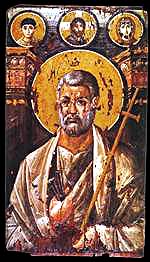
This week's passage focuses on the holy lifestyle that Christians should seek. But just what is holiness? What does it mean to be holy? Let's try to understand.
Get Ready, Get Set (1:13)
"Therefore, prepare your minds for action; be self-controlled; set your hope fully on the grace to be given you when Jesus Christ is revealed." (1:13)
Peter begins this section with the word "Therefore...." What is he referring to that lays the groundwork for his present call to action? It's clear from the context that he's referring to the great salvation discussed in verses 2 through 12. Salvation is described variously by the phrases: "sanctifying work" (1:2), "sprinkling by his blood" (1:3), "great mercy" (1:3), "new birth" (1:3), "inheritance" (1:4), "salvation" (1:5, 9, 10), and "grace" (1:10) -- a salvation that prophets yearned to learn more about and angels to peer into.
Therefore -- because you have such an awesome and precious salvation -- Peter urges his readers to live out their lives with holiness and serious purpose.
First he calls on them to "prepare your minds for action" (NIV, NRSV). The literal expression is interesting: "gird up the loins of your mind" (KJV). People in the first century wore long outer garments, but when it was time to work or walk, they would tie the ends of their garments around the waist (that is, the loins or kidneys), so as to keep them from getting in the way. Peter is saying, "Now give your full attention to this."[26]
The next directive is to be self-controlled (NIV), Greek nēphō, "be well-balanced, self-controlled," used figuratively, "to be free from every form of mental and spiritual 'drunkenness,' from excess, passion, rashness, confusion, etc."[27] NRSV translates it "discipline yourselves;" KJV "be sober." Have you been rather casual towards Christian living? Peter calls you to clear thinking.
The Second Coming of Christ (1:13)
Peter also directed his readers to "set your hope" on the coming of Christ -- that is, to focus on the time "when Jesus Christ is revealed," and on the grace that will accompany it. The Greek verb elpizō means (in this context) "to look forward to something, with implication of confidence about something coming to pass, hope, hope for, put one's confidence in someone or something."[28]
The second coming of Christ is alluded to several times in this letter (1:7, 12; 3:15; 4:5, 13; 5:4, 10). Just what grace will be revealed at Christ's coming? According to Peter:
- Salvation will finally be received and consummated (1:5, 9)
- Our now-maligned faith will receive its full reward and receive finally its "praise, glory, and honor" (1:7)
- Christ's glory will be manifested (1:12; 4:13; 5:1)
- God's visitation or inspection of our good deeds will take place (2:12)
- Judgment and vindication of Christians' righteous behavior (4:5)
- You will receive a crown of glory (5:4)
- He will restore, strengthen, confirm, and steady you (5:10)
Peter's perspective is of the present time involving struggle and suffering, but of a great anticipation of Christ's coming, glory, final judgment, and vindication of Christians.
This great hope of Christ's return should not inspire in us a sloppiness of life, but a determination to live our lives in holiness. The Apostle John, too, sees the hope of Christ's appearing to be a motivation to get our lives in order: "Everyone who has this hope in him purifies himself, just as he is pure" (1 John 3:3).
Q1. (1:13) What about Christ's coming should get our
undivided attention? Why should it inspire hope? Why should it inspire
self-control and soberness? What happens in our lives when we don't really
expect Christ to come soon?
https://www.joyfulheart.com/forums/topic/151-q1-christs-coming/
Conforming to the Standard of our Society (1:14)
What effect should an expectation of Christ's coming have on us? Peter exhorts us:
"As obedient children, do not conform to the evil desires you had when you lived in ignorance." (1:14)
You know the temptation to fit in. Your kids face extreme pressure from their friends to conform, especially during junior high and senior high years. You face pressure from an increasingly secular society where God and Jesus should not be mentioned. You are pressured to tell lies, to make moral compromises for the sake of business. Twenty-first century society places strong pressures on Christians and non-Christians alike to stay within its norms. But the pressure to conform was no less in Peter's day.
"Conform" is the Greek word syschēmatizō, "to form according to a pattern or mold, form or model after something."[29] The same word is used by Paul in Romans:
"Do not conform any longer to the pattern of this world, but be transformed by the renewing of your mind...." (Romans 12:2)
We conform to that which has the greatest influence over us. Little children imitate their parents' words and behavior -- often with humorous results. Teenagers tend to emulate their friends and the fashions and mores of a very trendy culture. At work we model ourselves after others. But we too often adopt values that are absolutely foreign to Jesus Christ. We can be chameleon Christians who are adept at blending into our surroundings rather than bringing salt and light (Matthew 5:13-16) to the people around us. Don't conform to the evil around you, says Peter, but conform to your Father's holy nature like obedient children.
Peter uses four words to describe life without God -- three in verse 14 and a fourth in verse 19:
- Former (Greek proteros), that which had a hold on us before our new birth. This is the old way, not the new!
- Ignorance (Greek agnoia), when you didn't know better.
- Evil desires (NIV) or lusts (KJV). This is the Greek noun epithymia, which can refer to "a great desire for something, desire, longing, craving." But here is used negatively -- "a desire for something forbidden or simply inordinate, craving, lust."[30] This includes, but is not limited to, illicit sexual desire.
- Empty (NIV), "vain" (KJV), "futile" (NRSV) is the description of our lives found in verse 19. The Greek adjective mataios means "pertaining to being of no use, idle, empty, fruitless, useless, powerless, lacking truth."[31] Why should we be influenced by a way of life that is so meaningless and shallow?
Peter is reminding us that now we are walking in a new life, a new birth, a redemption from the old slavery. Things are different now and we must learn not to live in the same old way.
Holiness Is What I Long For (1:15-16)
After telling us not to conform to the world, Peter offers a positive alternative: be holy.
"But just as he who called you is holy, so be holy in all you do; for it is written: 'Be holy, because I am holy.'" (1:15-16; quoting Leviticus 11:44-45; 19:2; 20:26)
Just what is holiness? What does it mean to be holy?
The Greek word for holy is hagios. But instead of examining the Greek derivation, we must go to the Hebrew word qādesh, since Peter is obviously recalling a strong Old Testament theme here. The root is best understood as serving to delineate the sphere of the "holy" or "sacred" from the profane or common.[32] Outside of the creation narrative, the first time we see holiness expressed is where God speaks to Moses out of the burning bush and commands him, "Take off your sandals, for the place where you are standing is holy ground" (Exodus 3:5). In Exodus we see God's majesty in holiness (15:11), his holy dwelling (15:13), a holy Sabbath to the Lord (16:23; 20:8-11), a holy nation (19:6), a holy mountain where God dwells, off-limits to mere mortals (19:23), and a Most Holy Place in the tabernacle that only the high priest can enter -- and only once a year (26:33-34; 28:29, 35).
God is holy and separate from sinful mankind. But so are those who are dedicated wholly to him. Moses, the priests, and Levites are ordained and set apart to serve God exclusively. Their garments, their food, and everything they touch while "on duty" is set apart to God. They belong to the Lord in a full and unique way. They are "devoted" to God's service exclusively.
God is not just separate from sinners, he is also morally pure and righteous. Isaiah the prophet writes:
"The Lord Almighty will be exalted by his
justice,
and the holy God will show himself holy by his righteousness." (Isaiah 5:16)
These are the ideas that underlie Peter's letters and the Book of Hebrews. God is holy and morally pure. Since we have been consecrated and set apart completely to him in baptism, we too are to be holy and morally pure. The writer of Hebrews tells that hardships are God's discipline for our good, "that we may share in his holiness" (Hebrews 12:10), the writer calls us "to be holy; without holiness no one will see the Lord" (Hebrews 12:14).
To draw close to God, we must hate iniquity and love righteousness. We must forsake sin and seek to resist temptation.[33] Of course, sometimes we fail miserably. We can't make ourselves holy by will power alone; it is God's forgiveness that gives us hope and the gracious Spirit of God who works holiness within us. Our attitude is reflected in the contemporary praise chorus by Scott Underwood:
"Holiness, holiness is what I long for,
Holiness is what I need.
Holiness, holiness is what you want from me.
Take my heart and form it,
Take my mind, transform it,
Take my will, conform it
To yours, to yours, O Lord."[34]
In the New Testament Christians are referred to as "saints, holy ones," because we have already been made holy by Jesus' atonement, called "salvation." Our sins are forgiven, removing the barrier between us and God. From here on out, the focus shifts from our guilt (now forgiven) to our character. The process of becoming more like God, that is, becoming more holy in our character, is called "sanctification" or "discipleship."
Q2. (1:15-16) In your own words, how would you define
"holiness"? In what sense are you (by definition) holy now? In what sense must
you be obedient in order to become holy? What is your biggest struggle with
holiness?
https://www.joyfulheart.com/forums/topic/152-q2-holiness/
Life in Light of Judgment (1:17)
Sometimes people tell us that we shouldn't be afraid of God. But the Bible doesn't really say that.[35]
"Since you call on a Father who judges each man's work impartially, live your lives as strangers here in reverent fear." (1:17)
We aren't to cower in fear; we can trust in God's love. But if we choose to live contrary to God's way, we can't expect him to ignore it, since he is just and "judges each man's work impartially" -- that is, "without reference to rank or status."[36]
Throughout the Bible, those who are believers are identified as those who "fear God," that is, believe in God's judgment and respect Him as the Rule-Maker. Jesus told his disciples, "Do not be afraid of those who kill the body but cannot kill the soul. Rather, be afraid of the One who can destroy both soul and body in hell" (Matthew 10:28). He wasn't telling them to fear Satan, but to fear Almighty God.
One of the important themes of the Gospel is that someday God will bring judgment and justice. When Paul explained the Gospel to Felix the Roman Governor, he spoke about "righteousness, self-control and the judgment to come," frightening Felix (Acts 24:25). In Romans, Paul says,
"This will take place on the day when God will judge men's secrets through Jesus Christ, as my gospel declares." (Romans 2:16)
In Athens, Paul announced,
"He has set a day when he will judge the world with justice by the man he has appointed. He has given proof of this to all men by raising him from the dead" (Acts 17:31).
Judging is also a theme in 1 Peter 2:12, 23; 4:5-6, 17.
Notice how Peter characterizes Christians -- as resident aliens, as we saw in 1:1. Here, "strangers" (NIV), "sojourning" (KJV), or "exile" (NRSV) translates the Greek noun paroikia, "the state of being in a strange locality without citizenship, sojourn, stay."[37] The related verb means literally "to dwell beside," that is, we live next to the houses of those who are citizens. Never forget that your citizenship is in heaven (Philippians 3:20) and it is to heaven's standards you will be held accountable, not to those of this world.
Q3. (1:17) Why are people in our culture so upset when
they sense they are being judged by someone else? How do you reconcile final
judgment with God's love for the world? Why must final judgment be at the core
of the Good News of Jesus Christ? What happens to the Gospel when final judgment
is left out or ignored?
https://www.joyfulheart.com/forums/topic/153-q3-final-judgment-and-the-gospel/
Redemption Price (1:18-19)
Holiness also includes the idea of ownership. If we are wholly owned by God, completely dedicated and consecrated to him, then we are set apart solely for his service. Redemption introduces the concept of payment to procure our freedom:
"For you know that it was not with perishable things such as silver or gold that you were redeemed from the empty way of life handed down to you from your forefathers, but with the precious blood of Christ, a lamb without blemish or defect." (1:18-19)
"Redeemed" (NIV, KJV) or "ransomed" (NRSV) is the Greek verb lytroō, "to free by paying a ransom, redeem." This word is literally used concerning purchasing freedom for prisoners and slaves.[38] Peter contrasts two kinds of redemption payments to free captives.
- "Perishable" (NIV, NRSV) or "corruptible" (KJV) is the Greek adjective phthartos, "subject to decay or destruction, perishable."[39] Silver and gold are the most that man can pay for redemption, but they too are perishable -- "You can't take it with you." Their currency is limited to this life only and has no value in the next.
- "Precious" is the Greek adjective timios, "pertaining to being of exceptional value, costly, precious, of great worth or value."[40] Peter points to the blood of Jesus as the purchase price -- a radical and powerful statement. He is referring to a sacrificial lamb that was used at Passover and for offerings for sin in the tabernacle and temple.[41]
Why is the Lamb's blood so "precious" or valuable? Because this Lamb is the Messiah, the God-anointed Savior, who is the Son of God himself!
Q4. (1:18-19) Have you ever felt you were of no worth or
of no value? What does 1 Peter 1:18-19 say about your worth? What does it say
about God's love for you? What does it indicate about the long-term value of
your balance sheet and financial assets? What are your true long-term
investments? Why?
https://www.joyfulheart.com/forums/topic/154-q4-your-value-in-gods-eyes/
Understanding Christ Better (1:20-21)
Now Peter offers a rhapsody of praise to God, a doxology about Christ the Messiah:
"He was chosen before the creation of the world, but was revealed in these last times for your sake. Through him you believe in God, who raised him from the dead and glorified him, and so your faith and hope are in God." (1:20-21)
Notice briefly some elements of Peter's understanding of who Christ is:
- Pre-existent.[42]
- Resurrected bodily.[43]
- Glorified, that is, exalted in heaven to his rightful place of authority and honor.[44]
- The One who points us to the Father.[45]
Sanctification by Obedience (1:22)
Holiness also involves obedience.
"Now that you have purified yourselves by obeying the truth so that you have sincere love for your brothers, love one another deeply, from the heart." (1:22)
This is a powerful truth. Holiness comes about by obedience to the truth! "Have purified" is the perfect tense of the verb hagnizō, "to cause to be morally pure, purify."[46]
Why are we so resistant to the idea of obedience? We stress that we are saved "not by works, so that no one can boast" (Ephesians 2:8) -- and so we are! But this is followed by Ephesians 2:10 which talks about our destiny, which is obedience -- doing good works.
There's an old Gospel hymn, with the refrain:
"Trust and obey, for there's no other way
To be happy in Jesus, but to trust and obey."[47]
Actually, the process of following a pattern of obedience reprograms our instincts, our way of acting and reacting. We become holy people by acting in the way that God sets out for us -- "Be holy as I am holy." The sanctifying process involves yielding to the Spirit in obedience instead of to the old nature (Romans 8:12-13; Galatians 5:16-26). In this way our new nature becomes "second nature" to us.
Sanctification Produces Sincere Love (1:22)
Now let's look at this verse again and see the result of this purification or sanctification:
"Now that you have purified yourselves by obeying the truth so that you have sincere love for your brothers, love one another deeply, from the heart." (1:22)
The result of God's work in us is real love. "Sincere" (NIV), "unfeigned" (KJV), "genuine" (NRSV) is the Greek adjective anypokritos, "unhypocritical," "pertaining to being without pretence, genuine, sincere," literally "without play-acting." Hypocritos (from which we get our word "hypocrite") comes from the world of the theater, and means "play-acting."[48]
You know how it feels to have people say that they love you, but you know in their hearts that they despise you. They're just putting it on. But one of the fruits of the Holy Spirit working in our hearts is unfeigned love that begins to flow through us.
In one breath Peter observes their genuine love and in the next he commands them to love one another from the heart. Why is that? Perhaps it is because Peter switches words, indicating movement from a lower form of love to a higher one.
- Brotherly love. "Love for your brothers" (NIV, KJV) or "mutual love" is the Greek noun philadelphia, "love of brother/sister." In ancient Greek literature the word refers to "a sense of love for blood brothers or sisters." [49] It describes well the love that flows between Christians.
- Agape love. A different word for love, the Greek verb agapaō, is used in the second part of the sentence. It means "to have a warm regard for and interest in another, cherish, have affection for, love."[50] This concept of agape love was not well developed in Greek usage. It seems that Christians took a less common word for love and filled it with their own meaning, that of a love which gives without out regard for receiving.
So in this verse, maturing Christians who are developing a love for one another are exhorted to let that love deepen into a self-giving love. Moreover, it must be a fervent love from the heart. "Deeply" (NIV, NRSV), "fervently" (KJV) translate the Greek adverb ektenōs, "pertaining to being persevering, eagerly, fervently, constantly."[51]
Our Imperishable New Nature (1:23-24)
Peter has been talking about the fruits of God's redemption and life in us -- holiness and sanctification. Now he turns again to the cause -- the new birth.
"For you have been born again, not of
perishable seed, but of imperishable, through the living and enduring word
of God. For,
'All men are like grass,
and all their glory is like the flowers of the field;
the grass withers and the flowers fall,
but the word of the Lord stands forever.'
And this is the
word that was preached to you." (1:23-24, quoting Isaiah
40:6-8)
Notice Peter's emphasis on the "word" of God and its power. If you've ever thought that preaching or Bible verses were weak, think again. When Christ is preached, it is like imperishable seed that begets new life in dead men and women. The word is powerful and creative.[52]
Positive and Negative Aspects of Sanctification (2:1-3)
Peter concludes this section with a renewed call to integrity. He is encouraged that genuine brotherly love is growing in them. Now he encourages them to go all the way and let God's word complete its work in them:
"Therefore, rid yourselves of all malice and all deceit, hypocrisy, envy, and slander of every kind. Like newborn babies, crave pure spiritual milk, so that by it you may grow up in your salvation, now that you have tasted that the Lord is good." (2:1-3)
Peter commands his readers to rid themselves of a number of negative practices, all of which have to do with evil thoughts or words. "Rid" (NIV, NRSV) or "laying aside" (KJV) is the Greek verb apotithēmi, which literally refers to taking off ones clothes. Figuratively, it means, "lay aside, rid oneself of."[53]
Dear friends, there are some churches -- maybe yours -- that abound in malice, deceit, hypocrisy, envy, and slander. This brings great shame upon Christ and his kingdom. If we tolerate and enable this kind of behavior in God's house, we can come to bear guilt for these sins ourselves.
Positively, Peter commands us to "crave pure spiritual milk." "Crave" (NIV), "long for" (NRSV), "desire" (KJV) translate the Greek verb epithymeō, "desire." Whereas evil desires (epithymia, verse 14) belonged to their old way of life, a hunger and desire for God belongs to their new life.
Peter isn't saying that his readers are all spiritual babies -- some of them have been Christians for 30 years or more. He's just using an analogy that all parents relate to instinctively -- a newborn's hunger for mother's milk that seems almost insatiable. We are to have that same kind of desire for God's word, Peter is saying. God's written and preached word seems the immediate context of 1:23-24.
I encourage you to begin a life-long habit of daily Bible reading to help satisfy in you a spiritual hunger resulting in your growing up in salvation. I'd like to recommend to you a practice that I've followed for the last 20 years. I read three chapters from the Bible each day: one chapter from the Old Testament, one from Psalms, and one from the New Testament. It takes 10 to 20 minutes per day and sometimes less. But it will nourish your soul by taking you through the Old Testament approximately once per year and the New Testament twice per year. If three chapters a day is too much, try just one a day. As a pastor, I've observed that people who feed on God's word as a life habit are the ones who grow as disciples and grow in holiness. Those who wait to be spoon-fed on Sunday mornings carry the earmarks of spiritual adolescents who never really "grow up" in their salvation.
 In book form as PDF, Kindle, and paperback |
Peter, now aged 50 or 60 years has been in the business of fishing for men and then discipling them for the past 30 years. He knows all about battling conformity to the world's values, the necessity of pushing into a holy life, and the importance of maintaining a healthy hunger for and a healthy intake of God's word. Peter calls you to press into maturity as a Christian disciple. Will you step up to the plate?
Prayer
Lord, we know too well about the struggle with sin. I pray for my brothers and sisters -- and me -- that you will help us to make a commitment to personal holiness in our living and thinking and speaking. Help us to leave behind the corrupting desires of the world around us and fill our hearts with your desires instead. Lord, we rely upon your strength. Help us, we pray, in Jesus' name. Amen.
Key Verse
"As obedient children, do not conform to the evil desires you had when you lived in ignorance. But just as he who called you is holy, so be holy in all you do; for it is written: 'Be holy, because I am holy.'" (1 Peter 1:14-16)
End Notes
[26] Anazōnnumi, BDAG 62.
[27] Nēphō, BDAG 672.
[28] Elpizō, BDAG 319 1αc
[29] Syschēmatizō, BDAG 979.
[30] Epithymia, BDAG 372.
[31] Mataios, BDAG 621.
[32] The root qdsh may be derived from qd, "to cut, to divide." It may then have developed the idea of dividing the holy off from the secular (Otto Procksch, "hagios," TDNT 1:88-97). In Akkadian, the word seems to mean "to be clean, pure, consecrated." In Canaanite texts, "holy" in a cultic sense. Thomas E. McComiskey (TWOT #1990) doesn't see enough evidence to come to a definitive conclusion on the derivation of the root word.
[33] Psalm 34:14; 37:27; 101:3; 119:104; Proverbs 3:7; 8:13; Amos 5:15.
[34] Scott Underwood, "Holiness Is What I Long For," ©1994, Mercy / Vineyard Publishing.
[35] 1 John 4:18 says "There is no fear in love. But perfect love drives out fear, because fear has to do with punishment. The one who fears is not made perfect in love." This doesn't mean we shouldn't have a reverent fear and respect for God. Rather it points out the superiority of love over fear as a motivator. When you love God completely then fear is obsolete as a motivator.
[36] "Impartially" (NIV, NRSV) or "without respect of persons" (KJV) is the Greek adverb aprosōpolēmptōs, "impartially, without reference to rank or status" (BDAG 126).
[37] Paroikia, BDAG 779.
[38] Lytroō, BDAG 606.
[39] Phthartos, BDAG 1053.
[40] Timios, BDAG 1005-1006.
[41] For details on this, see my book, Lamb of God (JesusWalk, 2011), lesson 4.
[42] Micah 5:2; Romans 16:25; Ephesians 1:4; 3:9, 11; Colossians 1:26; 2 Timothy 1:9; Titus 1:2-3; Revelation 13:8.
[43] Mark 16:6-7; Luke 24:34; Acts 2:32; 3:15; 4:10, 33; 5:30; 1 Corinthians 15:3-8, 12-23; etc.
[44] John 17:1; 12:23; Acts 2:32-36; 5:31; Philippians 2:9-11; Hebrews 2:9; 12:2; 2 Peter 1:17; Revelation 3:21; 11:15.
[45] John 5:19; 6:46; 12:50; 14:9; 1 Corinthians 15:25-28.
[46] Hagnizō, BDAG 12.
[47] "Trust and Obey," words by John H. Sammis, 1887.
[48] Anypokritos, BDAG 91.
[49] Philadelphia, BDAG 1055.
[50] Agapaō, BDAG 5-6.
[51] Ektenōs, BDAG 310.
[52] "Born again" (NIV, KJV) or "born anew" (NRSV) is the Greek verb anagennaō, "beget again, cause to be born again, figuratively of the spiritual rebirth of Christians" (BDAG 59-60). We saw this word before in 1:3. "Seed" is the Greek noun spora. The word of God, which is the source of faith and life is described with two adjectives: "living" and "abiding." "Enduring" (NIV, NRSV) or "abideth" (KJV) is the Greek verb menō, "to continue to exist, remain, last, persist, continue to live" (BDAG 630-631).
[53] Apotithēmi, BDAG 123-124.
Copyright © 2024, Ralph F. Wilson. <pastor joyfulheart.com> All rights reserved. A single copy of this article is free. Do not put this on a website. See legal, copyright, and reprint information.
 |
|
In-depth Bible study books
You can purchase one of Dr. Wilson's complete Bible studies in PDF, Kindle, or paperback format -- currently 48 books in the JesusWalk Bible Study Series.
Old Testament
- Abraham, Faith of
- Jacob, Life of
- Moses the Reluctant Leader
- Joshua
- Gideon
- David, Life of
- Elijah
- Psalms
- Solomon
- Songs of Ascent (Psalms 120-134)
- Isaiah
- 28 Advent Scriptures (Messianic)
- Daniel
- Rebuild & Renew: Post-Exilic Books
Gospels
- Christmas Incarnation (Mt, Lk)
- Sermon on the Mount (Mt 5-7)
- Luke's Gospel
- John's Gospel
- Seven Last Words of Christ
- Parables
- Jesus and the Kingdom of God
- Resurrection and Easter Faith
Acts
Pauline Epistles
- Romans 5-8 (Christ-Powered Life)
- 1 Corinthians
- 2 Corinthians
- Galatians
- Ephesians
- Philippians
- Colossians, Philemon
- 1 & 2 Thessalonians
- 1 &2 Timothy, Titus
General Epistles
Revelation
Topical

 To be notified about future articles, stories, and Bible studies, why don't you subscribe to our free newsletter, The Joyful Heart, by placing your e-mail address in the box below. We respect your